










Advantages

A Superstructure Design Method for
Synergistic Mechanical–Thermal Enhancement of Ultra-Insulation Materials
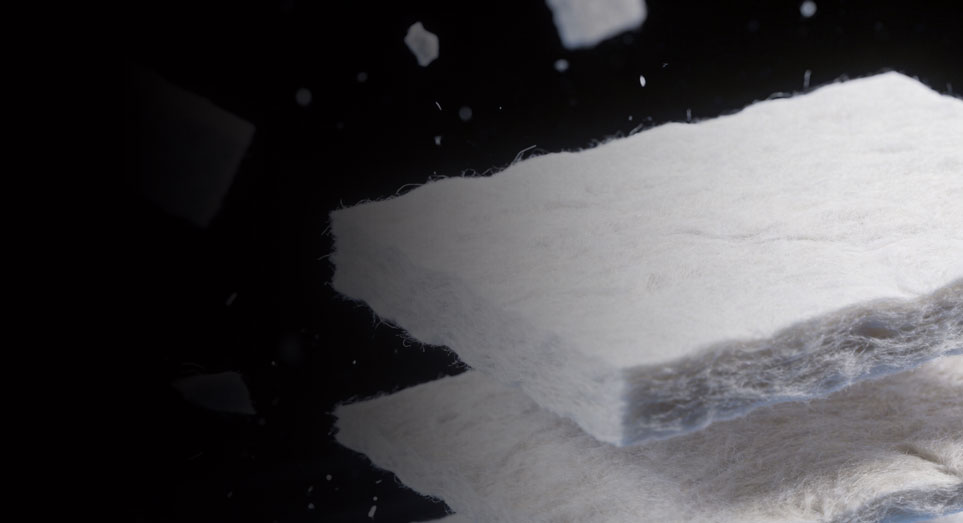
Conventional ultra-insulation materials, typified by silica aerogels, have long faced the common challenge of a "trade-off between mechanical strength and thermal insulation" owing to their intrinsic brittleness. The company has invented a superstructure design method integrating multiple unconventional physical properties, yielding a novel flexible ceramic fiber ultra-insulation material with high deformability, excellent thermal stability, and low thermal conductivity.
-
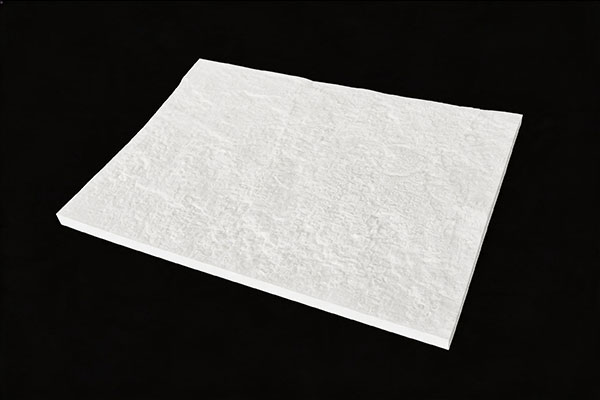
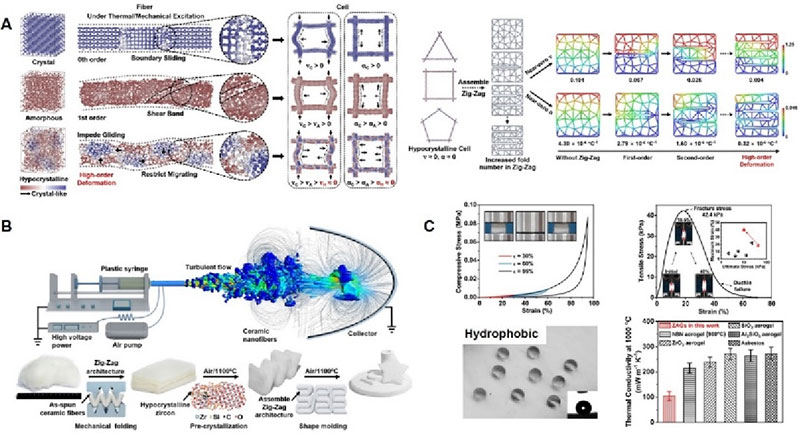
Semi-Crystalline CeramicsA design methodology for "semi-crystalline" ceramic aerogels has been developed, achieving, for the first time within a single material, the unconventional physical properties of "zero-Poisson's-ratio toughening" and "zero-thermal-expansion stabilization." The method employs gas-turbulence-assisted electrospinning to prepare semi-crystalline nanofiber ceramic aerogels, extending conventional electrospinning—originally limited to two-dimensional films—to the fabrication of three-dimensional materials.
-
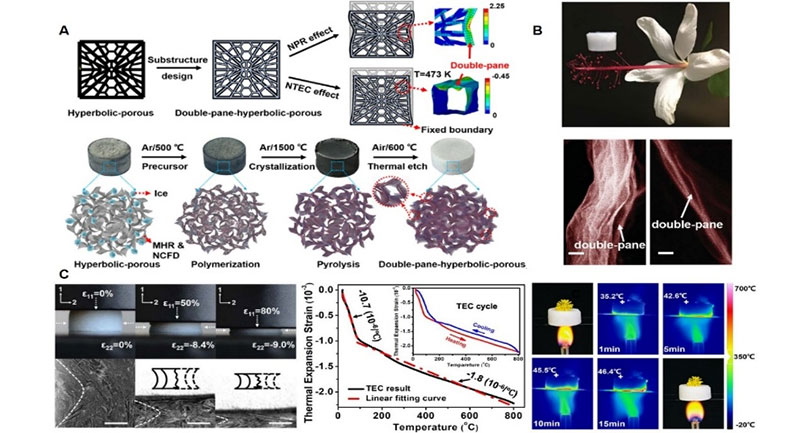
Superstructured CeramicsUsing a multi-scale superstructure design—combining hyperbolic macro-structures and double-walled micro-structures—the material innovatively realizes "negative-Poisson's-ratio toughening" and "negative-thermal-expansion stabilization" within a single component. This approach establishes both a superstructure design method that transforms ceramic aerogels from brittle to tough and an integrated preparation process that enhances thermal stability and insulation performance.
-
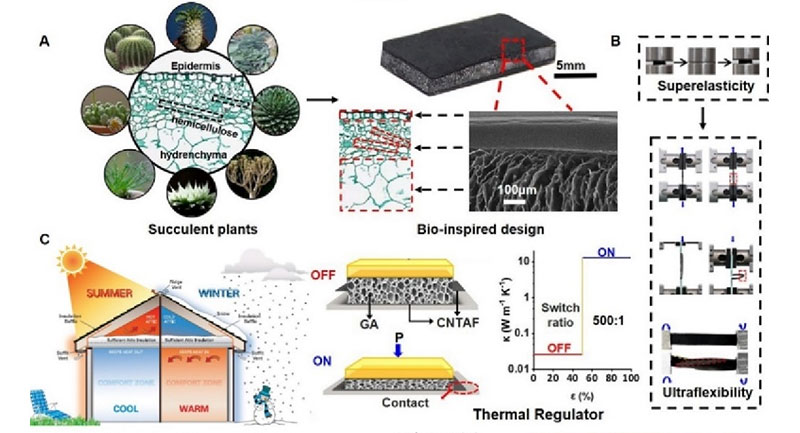
Bio-Inspired DesignInspired by the robust porous structures that succulent plants evolve in harsh environments, graphene aerogel emulates the plant's porous functional tissue, a carbon-nanotube aerogel film mimics the epidermis, and a graphene-oxide organic solution replicates the hemicellulose assembly fluid. By integrating the zero-Poisson's-ratio and negative-thermal-expansion superstructure design of graphene aerogel, this approach resolves the conflict—typical of aerogel materials—between mechanical and functional performance.